6.30.2006

LA Times Article


Today there was a Los Angeles Times article about Yap Proper. It discusses the caste system on Yap, and slightly mischaracterizes this complex system as "virtual slavery." While there are definite and defining limitations on persons of lower-castes (and another set of restraints and guidelines for Outer Islanders) the article paints a rather simplistic picture. A "glass ceiling" analogy may be a more appropriate. For a detailed consideration see the book "The Demystification of Yap: Dialectics of Culture on a Micronesian Island" by David Labby.

The article notes that many low caste Yapese choose to relocate to either Guam or Hawaii in order to escape this system. Because of the economic disparity between the large island of Yap Proper and the much poorer Outer Islands, few of the Outer Islanders have this option.

Habele firmly believes that educational accomplishment and expanded choice are the best ways to move towards a more open and merit-based socio-economic system. For additional information on our scholarships for Outer Island students please click here.

6.25.2006

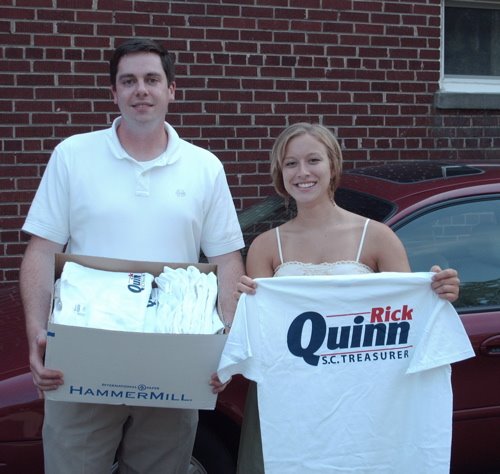
Donated T-Shirts (thanks Rick!)


South Carolinian political candidates are pitching in to help Habele, a nonprofit scholarship granting organization based in Columbia. Rick Quinn was the first to donate t-shirts, which Habele will be shipping to elementary schools in the Outer Islands of Micronesia, a string of isolated atolls in the Central Pacific.

“The Outer Islands of Micronesia are home to some of the most isolated and underdeveloped villages in the world,” said Neil Mellen, founder of Habele. “These shirts will mean a great deal to the students and teachers who receive them.”

The t-shirts, as well as office supplies, will be mailed in the coming days to ensure they reach Micronesia in time for next school year. Habele is working with candidates from both parties to gather more shirts and supplies.

Habele was founded by a group of returned Peace Corps Volunteers, and provides material assistance to Micronesian public schools in addition to its scholarships and grants for Outer Island students who attend independent boarding schools in the district centers.

To learn more, and found out how you can help, visit the Habele Outer Island Education Fund website at Habele.org

6.19.2006

Summer Fundraising!

Habele has kicked off its summer fundraising program with a recent mailing to the Friends of the Ulithian Libraries! These are groups and individuals who have an outstanding record of contributions and assistance to the elementary school libraries on Ulithi.

The Fund is working to gather enough money to continue its sponsorship of Outer Island girls at Bethania High School in Palau. Two of the Habele Board members have committed personal funds already via the Pay Pal donation link at www.habele.org.

In other news, Habele is crossing the “T”s and dotting the “I”s on its IRS form 1023 Non Profit Exemption Application. With the donated time and talent of several South Carolina based attorneys and tax-experts we hope to have the application posted by month’s end!

6.12.2006

Free Association

The Compact of Free Association (now superseded by Compact II) is the international agreement between the United States Government and the Federated States of Micronesia that allows for direct aid and “free association” between the two nations. The first Compact was negotiated in 1983, following the 1979 creation of the Federated States of Micronesia (FSM). The four island groups comprising the FSM were formerly ruled by the United States as part of a region-wide United Nations Trust Territory (1947-1979).

One one hand the Compact provides a huge array of national and state level assistance, as well as individual access to a wide range of US program traditionally reserved for US citizens. Direct assistance means that Micronesian schools receive money from the US Department of Education, the FSM Post Office works in conjunction with the USPS, and many of federal programs in the FSM mirror US departments in structure and funding source.

At the individual level the Compact includes the full range of social services and safety net entitlement programs, eligibility for higher education loans and grants, unrestricted migration to and from the US with only a passport, as well as the ability to enlist in the US military. This has led to large numbers of Micronesians living and working in Guam, Hawaii, and even the mainland US.

On the other hand some critics argue that these benefits pale in comparison to the total control exercised by the US over the region, and that they fail to compensate for the short comings of US development efforts during the 30-year UN Trusteeship. The Outer Islands of Micronesia in particular remain among the least developed communities in the region and the world.

More Information:

Analysis of Compact II by Dr. Robert A. Underwood of the East-West Center in Guam.

Independency and Self-Sufficiency in the Post Cold War Pacific by Ellen Boneparth, and M. James Wilkinson, Ambassador (Ret.)

Fact Sheet written by the US Citizenship and Immigration Services about the Compact defined rights of Micronesians in the US.

-Habele.org

6.06.2006

Bethania High School

Bethania is an all-girls parochial school in Ngaraard, Palau. The school provides a significantly more comprehensive curriculum than the public schools in the Outer Islands of Yap or Palau.

For the girls from the Outer Islands, the location of Bethania in Palau allows for more a more egalitarian climate, compared to schools on Yap Proper where the deep-rooted caste systems remains a part of everyday life.

Another important trait of Bethania, the single gender student body, is exceptional in a region with limited opportunities for females to pursue educational and occupational advancement.

Unfortunately few families in the Outer Islands have the financial capacity to send their daughters to Bethania. The founders of Habele have been sponsoring students since 2003. Habele is now working to raise the funds to maintain these scholarship through to net school year.

The recently released 2006-07 Tuition Schedule is:

Freshman - $1,412.00
Sophomore - $1,415.00
Junior - $1,395.00
Senior - $1,716.50

Based on these rates, Habele hopes to raise $2,810 for next school year. You can help by out by making a online contribution through PayPal.


More Info:

Story about an elderly female Peace Corps Volunteer who served in Palau, working at Bethania High School.

Wikipedia entry on the Palauan State of Ngaraad Ngaraad.

6.03.2006

Lava Lavas

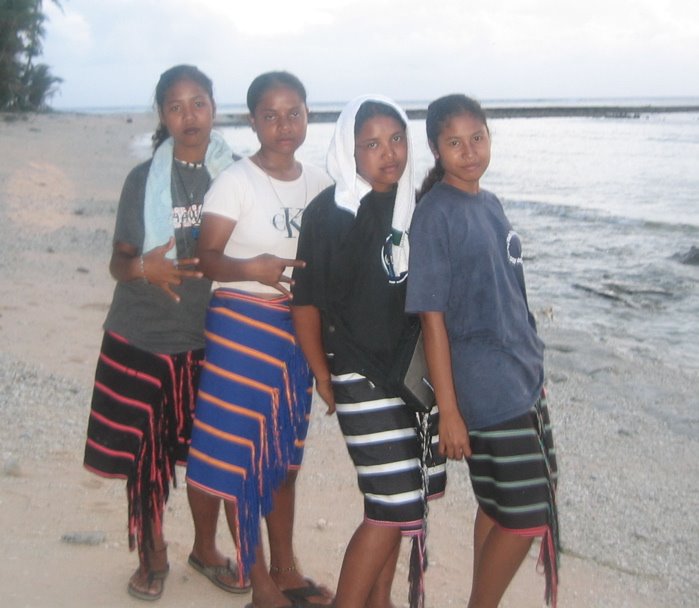
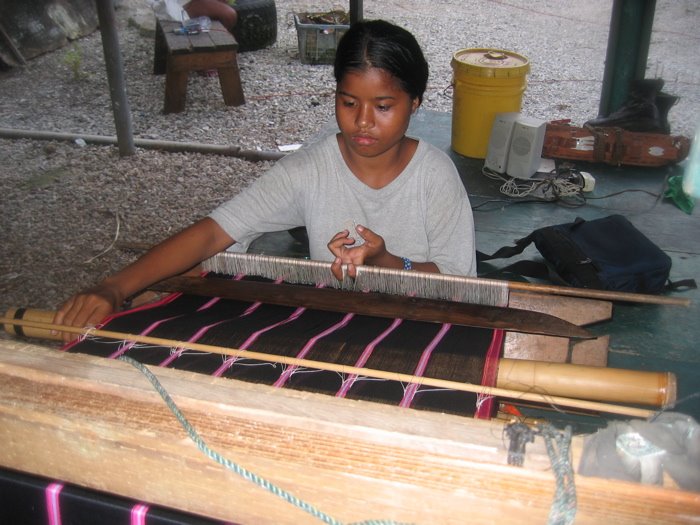
Lava lavas are woven skirts of various colors with parallel stripes.

The lava lava (ho) is one of the most visible symbols of Outer Islandness. Most women in the Outer Islands take pride in the making and wearing of them. Although modern lava lavas are for the most part always fabricated of synthetic fibers, the method is a traditional one, and wearing a lava lava is an important sign of Outer Island femininity.

There are limitations in more conservative families about the discussing of lava lavas around men, most particularly relatives, and especially those lava lavas the speakers are themselves wearing at the time. The wearing of the lava-lavas is a very public sign that a female has reached the point where she is a young woman.

The dawning of the lava lava traditionally involves a transition period, whereas the young lady (tarfafael) wears a grass skirt outside her simple fabric skirt for upwards of six months before her mothers’ sisters present to her the first lava-lava.

Historically lava lavas were only woven in the women’s menstrual house (yipwel), but since the war looms have become a common site in every Outer Island home. Lava lava also play an important role in funeral rites for both genders, as well as serving as a form of currency or offering when reconciling debts and obligation between families.

www.habele.org